Phoenix Is Still Growing: Why Domestic Migration Keeps Flowing Into the Valley While the Rest of the Sun Belt Stalls
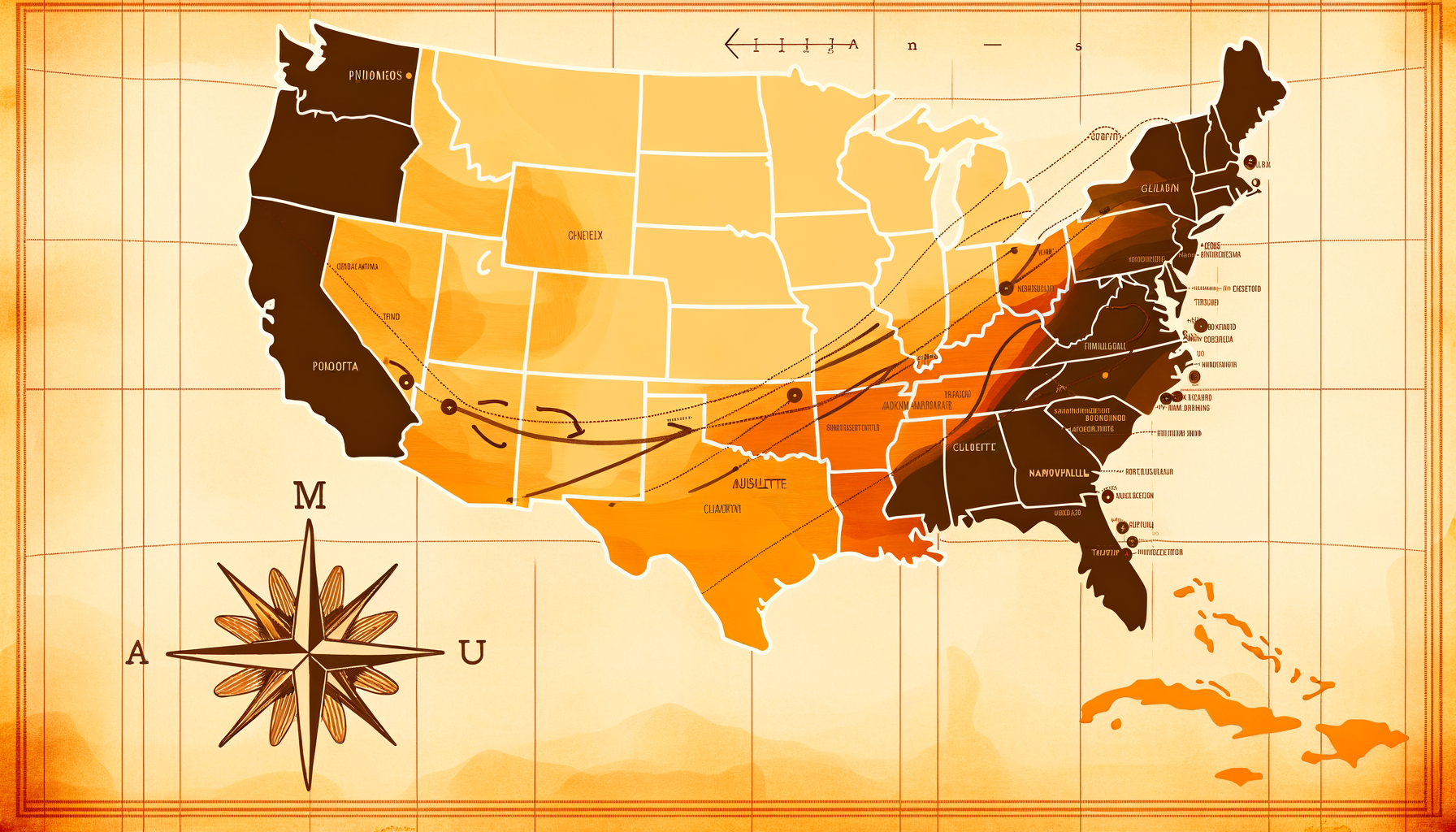
The dominant narrative in Sun Belt housing over the past 12 months has been deceleration: migration cooling, inventory accumulating, and the metros that led the pandemic boom struggling to hold price floors. Phoenix is the exception that stress-tests that story. While Tampa's domestic net inflow collapsed and Austin's fell sharply, the Valley's net domestic inflow increased. The structural reasons behind that divergence have direct implications for how Phoenix absorbs inventory and where prices settle in 2026.
The Migration Numbers: A Counter-Trend Signal
According to Census Vintage 2024 data, Phoenix's net domestic inflow rose from 19,378 to 21,364 between 2023 and 2024, a gain at a moment when most large Sun Belt metros were reporting decelerating or reversing domestic migration. The Bush Center and Census Bureau confirm that the Phoenix-Mesa-Chandler metro gained nearly 85,000 total residents from 2023 to 2024, placing it among the nation's top numeric gainers. The full breakdown of that 85,000-person gain, per Axios's analysis, was roughly 14,500 from natural change (births minus deaths), around 21,000 from domestic moves, and nearly 49,000 from international newcomers.
At the county level, Maricopa County added 57,471 residents between July 1, 2023, and July 1, 2024 — ranking third in the nation for county-level numeric growth, behind only Harris County (Houston) and Miami-Dade. This represents a near-doubling of Maricopa's prior-year gain of approximately 30,000, making the acceleration the more meaningful signal for analysts tracking trend direction.
Context from the peer group sharpens the picture. Austin's net domestic in-migration fell from 22,219 to 13,980, a roughly 37% decrease, according to Redfin's analysis of Census data. Tampa's situation was starker: its domestic net inflow in 2024 was less than one-third of the prior year's figure, representing what one analysis called the "biggest slowdown in domestic migration" in the country. Charlotte added more than 61,000 total residents over the same period, healthy growth powered more by international migration than domestic inflow. Phoenix, by contrast, expanded its domestic migration lead precisely as the broader Sun Belt story turned.
Why Phoenix Holds Its Pull
Three structural factors distinguish Phoenix from the peers losing domestic share.
Relative affordability from coastal origins. The primary feeder markets for Phoenix remain California and the Pacific Northwest, high-cost states that continue to record substantial net domestic outflows. As Redfin's 2024 migration analysis noted, "places like Tampa, Dallas and Austin were once seen as affordable alternatives to high-cost cities like San Francisco and New York, but now the gap in housing costs between big-city job centers and Sun Belt metros has shrunk." Phoenix has not closed that gap to the same degree. With a median listing price of approximately $496,900 per FRED series MEDLISPRI38060, Phoenix remains meaningfully cheaper than coastal California metros. The cost differential driving the California-to-Arizona corridor has not compressed as aggressively as it has for Florida and Texas alternatives.
Tax structure and interstate mobility. Tax Foundation and interstate mobility data consistently show that states without income taxes, or with more neutral tax structures, see stronger net inbound migration. Arizona's relatively competitive tax environment has been a durable pull factor, particularly for higher-income and highly mobile households. The Tax Foundation notes that "for some Americans — especially higher-income and highly mobile individuals — tax differentials among states directly influence location decisions."
Economic base diversification. Phoenix's employment base has evolved well beyond the retirement and hospitality economy that made it vulnerable in prior cycles. The region now anchors advanced manufacturing, semiconductors, financial services, and healthcare technology. TSMC is scaling its Arizona investment to $65 billion across multiple fabrication facilities in Phoenix, with fabs expected to ultimately employ over 6,000 workers, one of the largest private capital investments in recent U.S. history. Per CBRE's 2025 Scoring Tech Talent report, Phoenix ranked 20th overall among North American tech markets, with its tech talent labor pool growing 5.6% from 2021 to 2024 and exceeding 102,000 professionals; Arizona's unemployment rate held at 3.6% in 2024 per BLS data. IRS Statistics of Income data covering 2019–2023 show Arizona captured approximately $3 billion in net adjusted gross income inflows from interstate moves over that period, consistent with a high-earning domestic mover profile. This employment diversification creates a demand floor for housing that is less dependent on any single industry's cycle.
What Sustained Inflow Means for Inventory and Prices in 2026
For investors and market participants, the migration signal matters because it feeds directly into the supply-demand equilibrium driving months of supply and price direction.
Phoenix's current market data reflects a metro under measurable pressure but with an active demand base that distinguishes it from softer Sun Belt peers. The metro carries 19,889 active listings, 2.3 months of supply, and a median days on market of 54 (April 2026). These supply metrics look materially tighter than those in markets like Austin and Tampa, where months of supply has expanded into multi-month territory. (For Austin and Tampa's inventory context, see our analysis of Austin & Tampa Inventory: 8 Months of Supply and What It Means for 2026, or the side-by-side Austin vs Phoenix and Phoenix vs Tampa comparisons.)
Median listing prices have adjusted — down 4.4% year-over-year per FRED series MEDLISPRI38060 as of spring 2026 — a meaningful correction, but not the deeper one visible in markets where domestic inflow has reversed. The month-over-month trend has turned positive at +0.4%, consistent with demand absorbing newly listed supply rather than allowing it to accumulate unchecked. Update (August 2026): the FHFA's Phoenix HPI has since turned positive at the index level, at +0.8% year-over-year in 2026-Q2.
ARMLS data for March 2026 adds a forward-looking signal: contracts were up 10% year-over-year while new listings were down 7%, suggesting inventory compression after an extended expansion phase. At a 30-year fixed rate of 6.66%, financing remains the principal friction on demand activation. Sustained domestic inflow provides a buyer pool, including cash-heavy California equity migrants, that is less rate-sensitive than the median purchaser. Secondary markets within the metro — Buckeye, Goodyear, Surprise — are reportedly showing faster demand absorption ahead of primary market price recovery, which historically precedes broader price stabilization.
The counter-argument deserves acknowledgment: at 21,364 net domestic migrants, the inflow is strong in relative terms, but the absolute demand signal must compete with whatever new supply the market brings online. Phoenix has a history of construction activity that can outpace absorption during up-cycles. Investors tracking whether migration sets a meaningful price floor in 2026 should monitor FRED series ACTLISCOU38060 (active listings) and NEWLISCOU38060 (new listings) monthly for signs that the current inventory compression is durable rather than seasonal.
The broader Sun Belt correction is real, and markets like Tampa and Austin face genuine headwinds. Phoenix's domestic migration acceleration sets it apart structurally. A metro adding nearly 85,000 residents per year, with a net domestic inflow that is growing rather than shrinking, enters any price correction with a demand absorption advantage that comparably situated peers do not share.
One caveat worth flagging: Census Vintage 2025 data shows the average metro area growth rate nationally fell from 1.1% in 2024 to 0.6% in 2025, driven largely by a 54% decline in net international migration — from approximately 2.7 million to 1.3 million — as federal immigration enforcement tightened. Phoenix and Charlotte were among the metros that still topped the list of absolute numeric gainers despite the broader slowdown, per the Census Bureau's Vintage 2025 release. That sustained relative advantage is what makes the Valley worth watching differently in 2026.
For market watchers tracking the Valley closely, Maricopa County resident population data (FRED series AZMARI3POP) and the Census Bureau's Vintage 2024 county-level estimates remain the primary sources for monitoring population trends, alongside Phoenix active listing counts (FRED series ACTLISCOU38060) for real-time supply signals.
Track Phoenix home prices, permits, jobs, and population trends on our metro data page. Subscribe to the SunBeltPulse data newsletter for monthly updates on Phoenix active listings, days on market, and migration trend data.
This article was researched and drafted with AI assistance, fact-checked, and reviewed by an editor before publication — see our Editorial Standards. It is general information about real estate markets, not financial, investment, legal, or real estate advice; consult a licensed professional before acting. See our full disclosure.
More market analysis
Considering a move? Explore the full Phoenix market data — home prices, rents, jobs, permits, and population trends.
Beyond the calculator: see our full relocation toolkit — movers, agents, insurance, and city-test rentals.