Dallas-Fort Worth Tech Jobs 2026: 11,000 New Roles, $761M AI Investment, and What It Means for Relocators
If you're weighing a move to Dallas-Fort Worth and wondering whether the job market is as strong as the headlines suggest, one number does most of the work: 11,013.
CompTIA projects DFW will add 11,013 net tech jobs in 2026, lifting the total tech workforce to 388,026, the second-largest gain of any U.S. metro behind only New York. (Source: CompTIA State of the Tech Workforce 2026) For monthly job postings, DFW ranked third nationally in May, behind New York and Washington D.C., while its full-year net-job-gain projection of 11,013 puts it second. That projection comes from CompTIA's State of the Tech Workforce report, and it puts DFW in a category most people associate with San Francisco or Seattle.
This article is written for two people making a move decision together. One of you wants to see the employment data. The other wants to know what the city actually feels like to live in. Both of you will find something here.
The Number That Separates DFW from the Pack
DFW logged 10,840 active tech postings in May, up 273 from April, extending a run of growth for a regional tech base that has expanded alongside North Texas' broader corporate and finance boom. (Source: CompTIA Tech Jobs Report, June 2026) Only New York and Washington, D.C. posted more active listings.
That 273-posting monthly gain matters because it's directional evidence of momentum, not a static snapshot.
Seth Robinson, vice president of industry research at CompTIA, told The Dallas Morning News: "These tech jobs are popping up in a wide variety of industries — it's not just in the high-tech industry," noting that a high-population, diversified market like Dallas benefits as a result. That diversification is meaningful for relocators. Your job security in DFW doesn't hinge on whether one sector has a down quarter.
DFW also ranked second among metros for tech hiring in the finance sector, with 1,048 postings, and third for remote tech postings, at 2,292. (Source: CompTIA Tech Jobs Report, June 2026)
The Wistron Facility as a Talent Signal
Behind every projection is a capital decision. The one worth knowing about is Wistron.
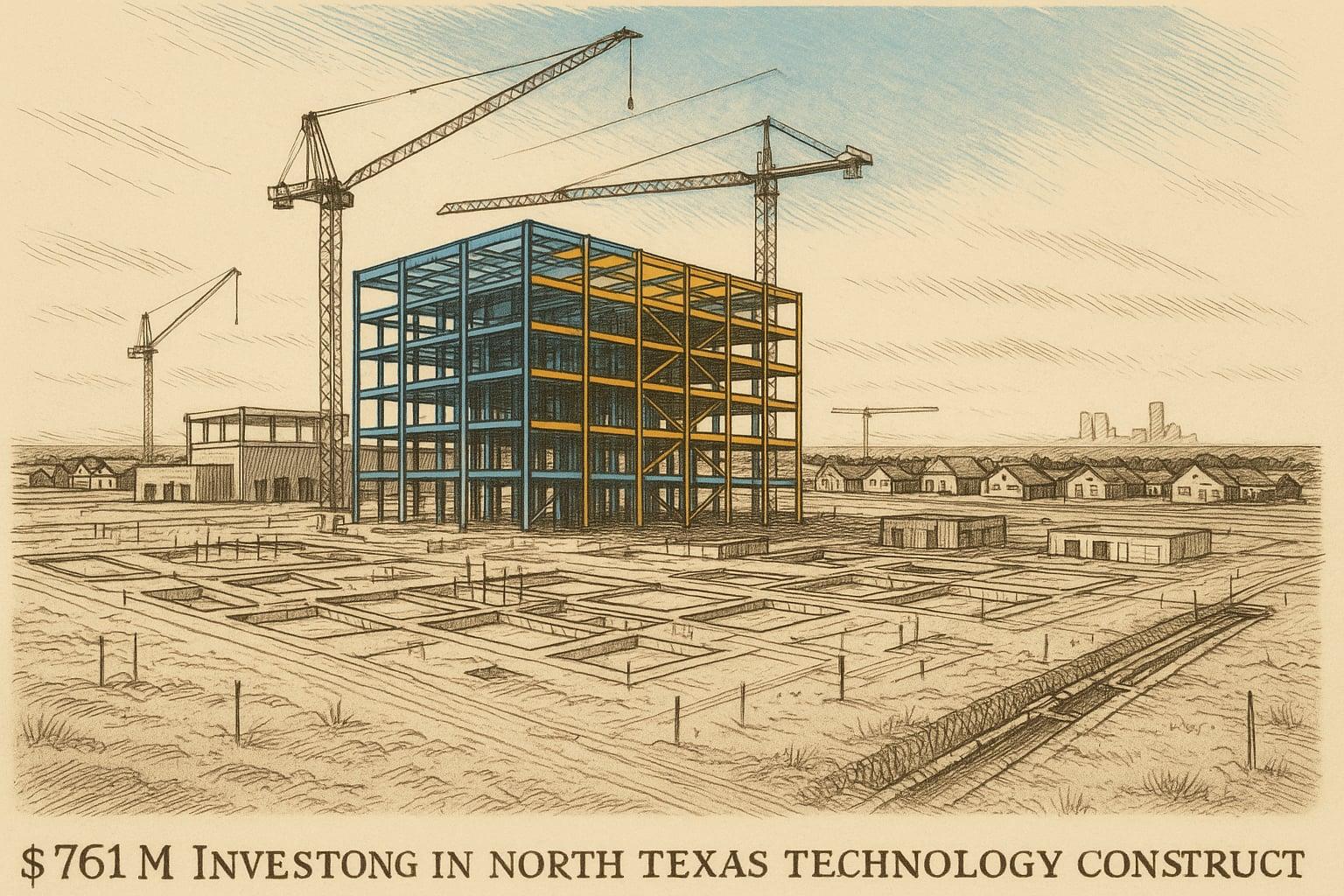
Wistron, one of the world's largest electronics manufacturers, opened its first U.S. AI supercomputing facility at AllianceTexas, representing a total investment of $761 million and creating more than 800 full-time jobs. (Source: Hillwood press release, March 2026 update; original announcement August 2025)
Fort Worth city officials and Denton County commissioners approved tax abatements that helped land Wistron, beating contenders that included El Paso, Nashville, and Fremont, California. (Source: dentonrc.com / Fort Worth Report)
The practical implication: Wistron's facility manufactures NVIDIA AI supercomputing infrastructure in the Dallas metro. DFW-area data center clusters include downtown Dallas, Richardson, Plano, Irving, Garland, and the fast-growing corridor around Fort Worth and Alliance. That corridor is now building out rapidly, creating demand for data center technicians, field engineers, and logistics professionals, not only for pure software roles.
DFW vs. Austin and Phoenix: The Honest Comparison
If you're already considering Austin or Phoenix, here's how to think about Dallas relative to those markets.
Austin remains a startup hub with a younger tech culture, but the city's construction boom and rent decline reflect a market that overbuilt after the pandemic surge. DFW's tech employer base skews toward established enterprises, financial technology, telecom, healthcare IT, which generally means more stability and less headline volatility.
Phoenix is growing but posts significantly fewer active tech listings than DFW. The CompTIA data puts DFW third nationally. Phoenix doesn't register in the same tier.
On housing, the DFW picture is measured. DFW recorded net tech employment of 377,013 in 2025, second only to New York among U.S. metros, with tech workers making up 8.7% of the regional workforce. (Source: CompTIA State of the Tech Workforce 2026) That density drives demand for housing in specific corridors, and prices have responded.
FHFA data show the correction in the Dallas-Plano-Irving metro has flattened out: home prices were up 0.5% year-over-year in Q2 2026, with Fort Worth-Arlington up 0.7% (source: FHFA House Price Index, Q2 2026) — no longer declining, but nowhere near a reheated market.
For renters evaluating their first year in DFW, the HUD Fair Market Rent for a two-bedroom in the Dallas metro sits at $1,931 per month. (Source: HUD FY2026 Fair Market Rents) Housing is the dominant cost pressure in Dallas, reflecting a market that absorbed a decade of in-migration from higher-cost metros.
Where Tech Workers Are Actually Landing
The data corridor that matters most runs north: Plano, Frisco, and the Las Colinas area near Irving. Those three submarkets cluster around the bulk of corporate headquarters relocations and established tech campuses.
Areas like Plano, Frisco, and Richardson are frequently praised for top-rated schools and safety, making the corridor a magnet for engineers with families.
Richardson and Plano tend to pay above-average technician wages due to competition from nearby major tech campuses, worth factoring into offer negotiations.
Fort Worth and the Alliance area pay closer to the metro average, but housing costs track lower, particularly relevant for the family anchor in any couple running the numbers on a mortgage at current rates.
DFW has consistently ranked among the most active U.S. metros for residential permitting in recent years, reflecting a pipeline that has kept new construction available even as demand holds firm.
The Headquarters Effect Behind the Job Growth
In DFW, tech demand is spread across many industries rather than concentrated in a single sector. (Source: CompTIA State of the Tech Workforce 2026) That's partly the result of corporate relocation momentum. Per our earlier coverage of DFW corporate HQ relocations and housing demand, the metro continued to attract corporate headquarters relocations in 2025, a trend documented by the Dallas Regional Chamber and Site Selection Magazine, bringing embedded demand for tech talent across finance, legal, and operations teams.
DFW's sector mix, financial technology, cybersecurity, telecom, healthcare, and insurance, functions as a hedge. If AI-specific hiring softens in the second half of the year, finance and healthcare tech roles will pick up slack in DFW in a way they won't in a more narrowly specialized market.
Relocation Takeaways
For the person running the job-market spreadsheet: DFW's tech employment base is the second-largest non-coastal metro in the country, growing at a pace second only to New York, with $761 million in fresh AI manufacturing infrastructure now operational in Fort Worth. FHFA data show Dallas-Plano-Irving home prices up just 0.5% year-over-year in Q2 2026 (Fort Worth-Arlington up 0.7%), a mild correction that has flattened out rather than deepened — stable pricing for buyers without signaling systemic distress. (Source: FHFA House Price Index, Q2 2026) One honest caveat: the DFW unemployment rate has drifted up to 4.7% as of June 2026 (not seasonally adjusted), up from 4.0% a year earlier, even as tech hiring continues — worth watching, though the tech-specific demand picture remains strong.
For the person who wants to know if this actually feels like a place to live: the northern suburbs offer the infrastructure and school ratings that matter to families. The food scene in the northern corridors has expanded alongside the population. The tradeoff is real: summers are punishing and car ownership is non-negotiable across most of the metro.
Both of you have enough to move forward. Run the mortgage numbers on a Plano or Frisco home using a Dallas housing market affordability tool, then check school ratings for the specific zip codes closest to your employer. Those two data points will get you to a decision faster than any headline.
This article was researched and drafted with AI assistance, fact-checked, and reviewed by an editor before publication — see our Editorial Standards. It is general information about real estate markets, not financial, investment, legal, or real estate advice; consult a licensed professional before acting. See our full disclosure.
More market analysis
Considering a move? Explore the full Dallas-Fort Worth market data — home prices, rents, jobs, permits, and population trends.
Beyond the calculator: see our full relocation toolkit — movers, agents, insurance, and city-test rentals.