Nashville's Corporate HQ Boom: What Oracle, AllianceBernstein, and Amazon Mean for Housing Demand in 2026
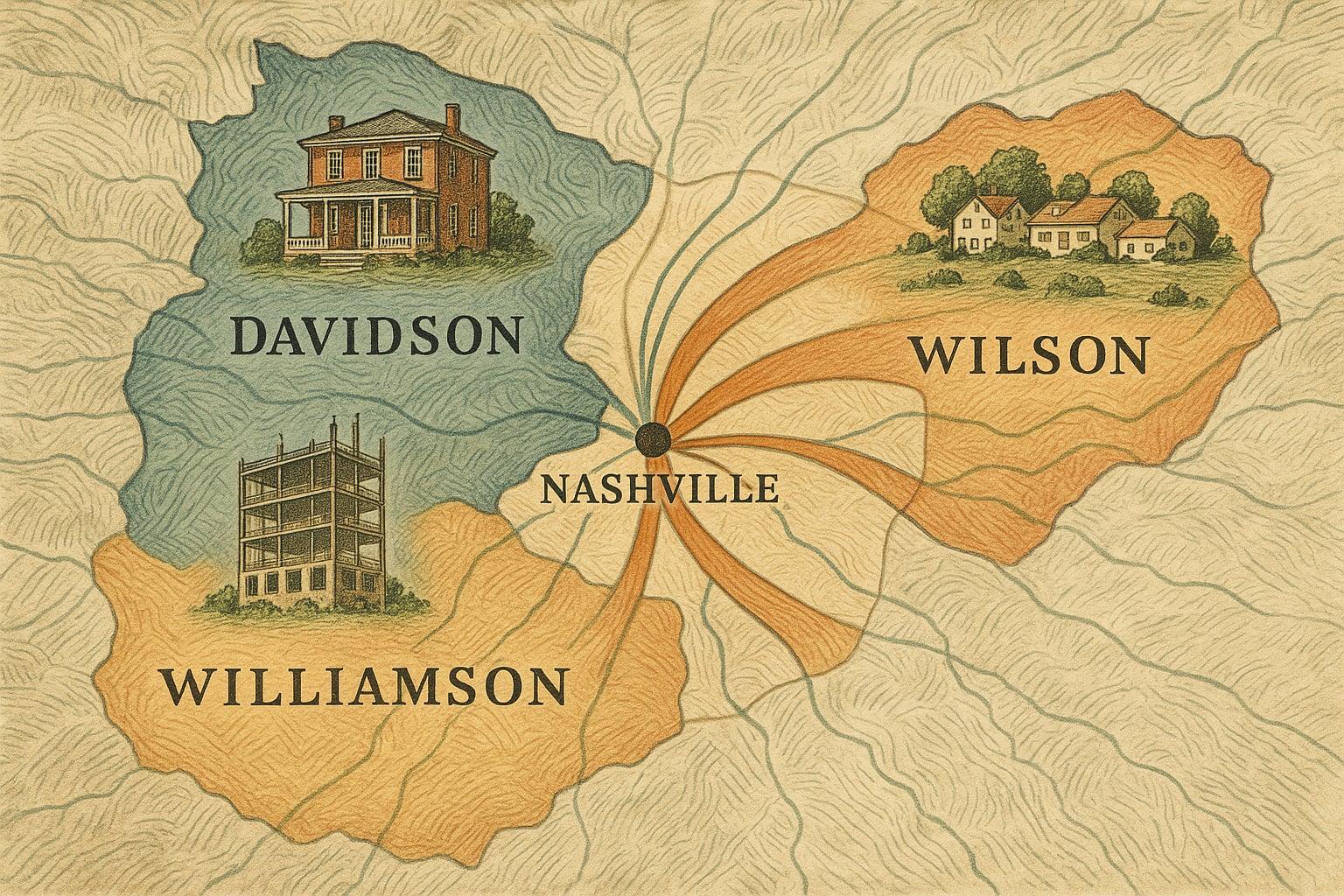
If you're weighing a move to Nashville right now, you're not early — but you're not too late either. The city's corporate corridor is reshaping which counties make sense for your household, and the data tells a clear story about where demand is heading next.
The HQ Momentum Is Real
Six companies chose Nashville in 2025, a total that tied the city for fourth nationally alongside Phoenix and Tampa in headquarters relocations. That's not a one-year blip. According to CBRE's 2026 HQ Relocation Report, Charlotte, Miami, Nashville, and Phoenix continue rising as major contenders due to pro-business environments, tax benefits, growing talent pools, and supportive infrastructure.
Tennessee's no-state-income-tax structure is a real draw for executives and the employees who follow them. CBRE recorded 164 total HQ moves in 2025, more than any other year since 2018. Nashville captured a meaningful share of that flow, and the pipeline into 2026 is anchored by three names that matter for housing demand: Oracle, AllianceBernstein, and Amazon.
Oracle's East Bank Campus: The Long Game
The single biggest job-creation bet on Nashville's future sits along the Cumberland River's East Bank. Oracle received the largest economic development incentives in city and state history, with plans tied to bringing 8,500 jobs to the city by 2031. The campus investment is pegged at $1.2 billion. (Source: Nashville.gov; TalkNWestTN)
8,500 jobs. That's the number to keep in your head.
According to Nashville city documents, Oracle's project would reach 2,500 jobs by the end of 2027, scaling to the full 8,500 by the end of 2031, with an average salary of $110,000. Those are not warehouse jobs. At that income level, incoming workers are mortgage-eligible buyers, not just renters — and they will land primarily in Davidson County, the East Bank's home county.
Oracle has been building out its local presence ahead of campus construction, with hiring expected to accelerate as the project progresses. Construction on the main campus has not yet begun, which means the largest wave of demand is still ahead.
AllianceBernstein and Amazon: Compounding the Signal
Asset manager AllianceBernstein moved its headquarters from Midtown Manhattan to Nashville, relocating about 1,050 jobs. That transition is now complete, with the firm occupying its permanent downtown headquarters at Fifth + Broadway. Since 2018, Nashville has attracted major corporate relocations including AllianceBernstein, Amazon, Mitsubishi Motors North America, Oracle, In-N-Out Burger, and Starbucks.
Amazon's piece of this is worth noting separately. Amazon announced it would bring 5,000 jobs through a $230 million investment in a new operations hub in Nashville. Stacked on top of Oracle's commitment, you have a city that has pledged over 13,000 high-wage jobs from three employers alone, arriving over the next several years.
The healthcare ecosystem underpins all of it. According to the Nashville Health Care Council, Tennessee's capital city has more than 900 companies with 550,000 employees working in the healthcare industry. That existing talent base is precisely what drew Oracle chairman Larry Ellison to the city. "Nashville is a fabulous place to live," Ellison said. "It's a great place to raise a family."
How Jobs Map to Housing — by County
This is where the relocation math gets specific. Not every county benefits equally.
Davidson County is ground zero. Oracle's East Bank campus sits here, and the county is already the most active market in the region. Davidson County closed July 2026 with a median home price of $483,590 (Davidson County, per Realtracs MLS data) and 5.97 months of supply — the loosest inventory picture among the region's four largest counties. For buyers, that means more negotiating room than you'd find in the suburbs, though prices reflect the employment premium.
Williamson County sits to the south and is the region's premium tier. Home values in Brentwood, Franklin, and Nolensville in Williamson County lead Nashville's suburban cities in 2026. Brentwood commands the region's highest price tier, with medians well above $1 million — recent MLS pulls have ranged from approximately $1.1M to $1.5M depending on the trailing window and home-type filter (per Realtracs MLS data). Franklin commands some of the region's highest suburban price points, with many listings well above $800,000. Williamson draws buyers who prioritize school ratings and lower density over commute convenience.
Wilson County offers a different calculus. Wilson County offers mid-range pricing and buyer decision timelines that have historically been shorter than Davidson County — check the current Realtracs MLS pull for the latest figures (Wilson County, per Realtracs MLS data). The Mt. Juliet and Lebanon corridor continues to convert commuter demand from Davidson County into steady mid-range transactions. For households where one partner commutes to the East Bank and the other needs room to breathe, Wilson County is the pressure-relief valve.
Supply Is Rising, But Jobs Are Rising Faster
Nashville's inventory story is genuinely mixed. Over the three months ending June 2026, Nashville home prices were up 1.0% compared to the same period last year, with a median sale price of $480K (city of Nashville, per Redfin). The Nashville inventory surge has given buyers more options than they had two years ago — but payroll growth is still absorbing that supply.
BLS nonfarm payroll data through late 2025 shows Nashville MSA jobs growing at 1.7% year over year. The FHFA House Price Index confirms prices are still moving upward on a year-over-year basis. Population is also growing, according to recent Census estimates. These three indicators together describe a market where demand is not cooling; it's just becoming more selective about price.
Census Building Permits data shows new construction has pulled back year over year. Fewer new homes coming to market while payrolls grow is not the setup for price softness.
What This Looks Like on the Ground
Greater Nashville Realtors has noted that surrounding counties offer buyers housing options at varying price points, close proximity to Nashville's job centers, and the quality of life that keeps the region competitive — factors that explain why suburban demand has remained durable even as Davidson County inventory has loosened.
For the partner focused on schools and neighbourhood stability, Williamson County's Franklin and Brentwood have long led in published school performance metrics. Wilson County's Mt. Juliet corridor is growing its school base alongside its population. Davidson County's East Nashville and Germantown neighbourhoods sit closest to the Oracle campus footprint.
How to Decide: A Framework for Both Partners
If you're the partner running the numbers: Nashville's job story is durable, not speculative. Three employers have collectively committed to more than 13,000 jobs at above-average wages, the FHFA price index is positive, and payroll growth at 1.7% year over year is outpacing most comparable Sun Belt metros. Homes in Nashville are selling after an average of 61 days on market — enough time to negotiate, not enough to suggest a market in freefall. The longer you wait, the more of Oracle's first hiring wave you're competing against for the same Davidson County inventory.
If you're the partner weighing what daily life actually looks like: Wilson County's Mt. Juliet gives you more space and prices that still undercut Williamson's premium tier. Williamson — Franklin in particular — delivers if school ratings and suburban density are your priorities. Davidson County's East Bank corridor is mid-development, sitting closest to where the largest job growth is landing.
Explore Nashville housing market data to run the numbers on your target county, then use a mortgage calculator to see how Davidson versus Wilson pricing maps to your budget at today's rates.
This article was researched and drafted with AI assistance, fact-checked, and reviewed by an editor before publication — see our Editorial Standards. It is general information about real estate markets, not financial, investment, legal, or real estate advice; consult a licensed professional before acting. See our full disclosure.
More market analysis
Nashville's Suburban Population Boom: What Rutherford and Wilson County Growth Means for Families Relocating in 2026
5 min read
Charlotte and Nashville Are Now the Sun Belt's Top Corporate Relocation Magnets — What It Means for Housing
7 min read
Nashville's Inventory Explosion: Active Listings Up 193% — What a 5.6-Month Supply Means for Buyers and Sellers in 2026
6 min read
Considering a move? Explore the full Nashville market data — home prices, rents, jobs, permits, and population trends.
Beyond the calculator: see our full relocation toolkit — movers, agents, insurance, and city-test rentals.