Fed Raises Rates for the First Time Since 2023: What Sun Belt Homebuyers and Investors Need to Know
Compare Dallas-Fort Worth vs Nashville side by side
If you're planning to buy a home in Dallas, Nashville, Tampa, or anywhere else in the Sun Belt, last week's Federal Reserve decision just changed your math.
On September 16, 2026, the Federal Open Market Committee voted 12-0 to raise the federal funds target range by 25 basis points to 3.75%–4.00%. It was the first increase since July 2023, after a cutting cycle that lowered the target to 3.50%–3.75% by December 2025. The move was widely expected, but that doesn't make the affordability hit any easier to absorb.
The Number That Actually Moves Your Rate
Here's the thing most buyers miss: the Fed funds rate doesn't set your mortgage rate. The 10-year Treasury yield does.
The 10-year U.S. Treasury yield crossed 5% on September 14 for the first time since October 2023, increasing pressure on mortgage pricing immediately before the Fed's policy meeting. Mortgage rates tend to track longer-term Treasury yields more closely than the Federal Reserve's overnight policy rate.
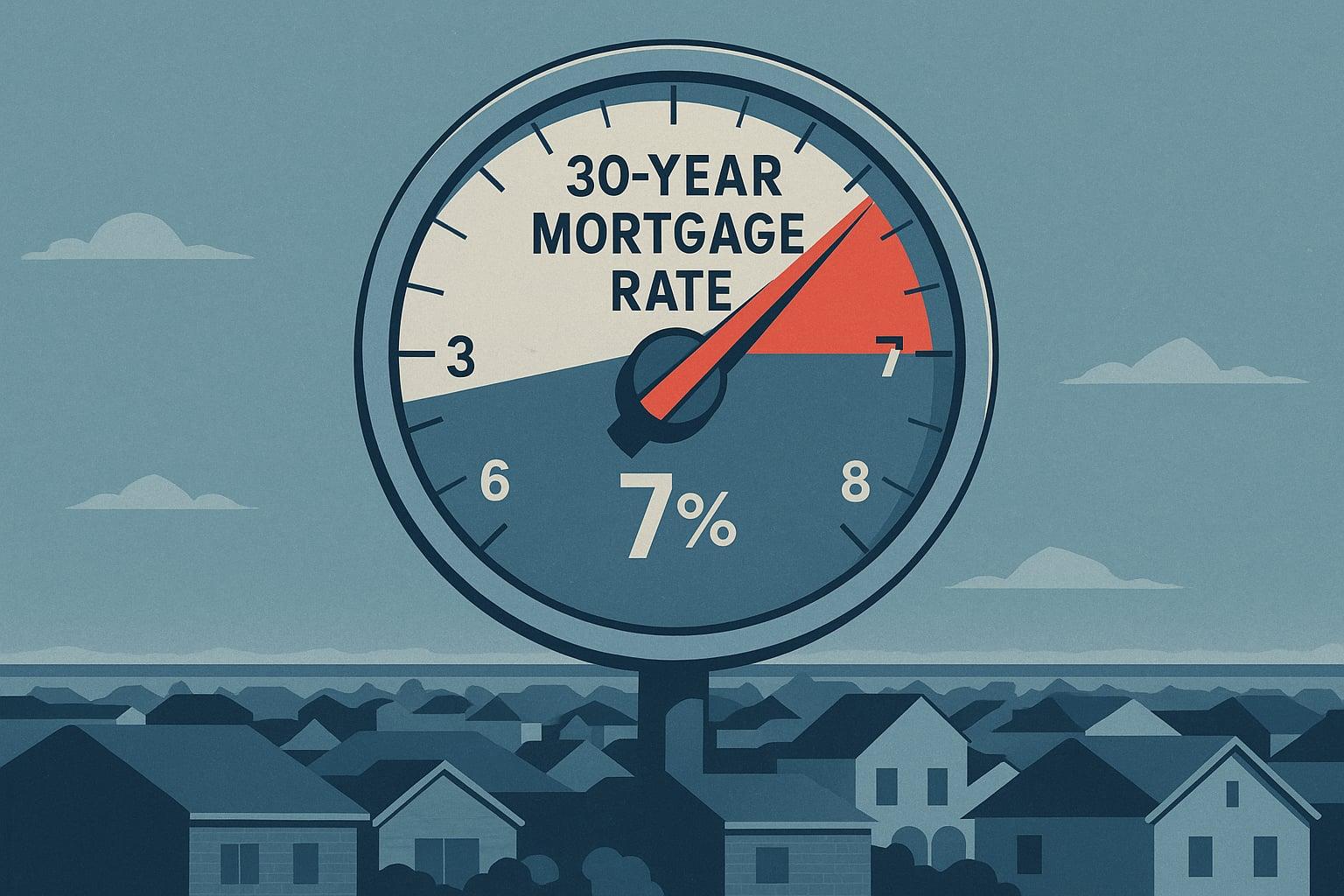
The average 30-year fixed mortgage rate rose to 6.76% in the week ending September 10 (Source: Freddie Mac Primary Mortgage Market Survey, week of September 10, 2026). The most current read: the 30-year fixed sits at 6.95% (Source: Freddie Mac Primary Mortgage Market Survey, week of September 17, 2026).
That's a significant climb over recent months. On a median-priced Sun Belt home, that's a meaningfully higher monthly payment than buyers were underwriting earlier in the year.
What This Does to Median-Priced Markets
Look at the three metros where this bites hardest right now.
Over the three months ending August 2026, Dallas homes sold for a median price of $449K (Source: Redfin, August 2026). In Nashville, the median sale price was $480K over the three months ending June 2026, the latest available from Redfin, which lags the Dallas and Tampa figures by two months (Source: Redfin, June 2026). In Tampa, the median came in at $479K over the three months ending August 2026 (Source: Redfin, August 2026). Redfin August 2026 data for Houston and Austin was not available at publication; Houston's FY2026 two-bedroom FMR is $1,573/mo as a rental-market proxy (Source: HUD Fair Market Rents, FY2026) — note that FMRs reflect HUD's 40th-percentile gross-rent benchmark, not median market-rate asking rents. Austin's FY2026 two-bedroom FMR was not available at publication; the metro has seen significant rent moderation since 2022. Dallas's FHFA House Price Index appreciation is running at only +0.5% year over year as of Q2 2026 (Source: FHFA House Price Index, Q2 2026), underscoring how little price growth is offsetting the affordability squeeze from rising rates.
All three are clustered near $450K–$480K. To put the rate move in concrete terms: on a $449K Dallas home with 20% down ($359,200 loan), the principal-and-interest payment at 6.76% is approximately $2,330 per month, versus approximately $2,381 per month at 6.95%, a difference of roughly $51 per month, or about $612 per year. That gap narrows what lenders will approve and compounds over a 30-year term.
The Multifamily Stress Test in Dallas, Houston, and Nashville
For investors, the rate move creates a different kind of pressure, one that's already visible in the rental numbers.
Nashville's multifamily pipeline grew rapidly during the low-rate era, and the supply added since 2021 has weighed on landlord returns, a dynamic that refinancing pressure from higher long rates could amplify. With the 10-year Treasury above 5%, floating-rate bridge loans taken out in 2021 and 2022 face sharply higher refinancing costs.
Industry analysts warn the gap between property cash flows and debt-service costs could widen further in Dallas, Houston, and Nashville if additional hikes arrive.
More Hikes Are on the Table
Don't assume this is the last move. Sixteen of the 18 FOMC participants who submitted dot-plot projections expect at least one more rate hike this year — Fed Chair Warsh did not submit a dot, per the Fed's Summary of Economic Projections (Source: Federal Reserve Summary of Economic Projections, September 16, 2026). The median federal funds rate projection for year-end 2026 is 4.1%, implying one additional 25-basis-point increase after this meeting (Source: Federal Reserve Summary of Economic Projections, September 16, 2026).
If that hike arrives in late 2026, the 10-year Treasury stays elevated, and mortgage rates follow. Buyers who lock a rate now sidestep that risk.
The Permit Pullback Makes This Worse Later
Here's the long game you need to understand.
Census Bureau data for July 2026 shows Austin down 10.7% year over year, Dallas down 10.5%, and Orlando down 3.6%, while Nashville saw a steeper decline of 31.9% (Source: Census Bureau Building Permits Survey, July 2026). Tampa ran counter to that trend, with permits surging +37.8% year over year in July 2026, a reminder that supply dynamics vary meaningfully across Sun Belt metros (Source: Census Bureau Building Permits Survey, July 2026).
Higher rates push developers to pause. Paused developers mean fewer homes coming to market in 2027 and 2028. When buyer demand eventually returns (as rates ease) supply will be thinner than today. That's the setup where prices tend to move fast.
For Dallas specifically, the Dallas housing market data shows permit activity already contracting, layered on top of a multifamily sector cautious about new starts.
The Wait-or-Buy Decision
You are not timing a stock. You are choosing when to lock a 30-year cost of shelter.
If you are ready to move (financing is approved, the metro fits your life, and you have found the right property) waiting for rates to fall while they may still rise is a losing position. A rate lock today is an insurance policy against a late-2026 hike. And if rates do fall in 2027, you can always refinance.
If you are not ready, the permit data is actually working in your favour. Less new supply means less downward pressure on resale prices. The floor in these markets is firmer than the headlines suggest.
Texas buyers have one offset worth noting. The mandatory school district homestead exemption rose from $100,000 to $140,000, reducing taxable value for school district purposes and trimming carrying costs in Dallas, Houston, and Austin even as mortgage payments climb.
Get your rate locked, compare your metros side by side on the Dallas vs Nashville housing comparison, and make the call with current numbers, not the ones from last spring.
This article was researched and drafted with AI assistance, fact-checked, and reviewed by an editor before publication — see our Editorial Standards. It is general information about real estate markets, not financial, investment, legal, or real estate advice; consult a licensed professional before acting. See our full disclosure.
More market analysis
Florida's 2027 Flood Insurance Deadline: What Tampa, Jacksonville, and Orlando Homeowners Must Do Now
4 min read
AEI Projects National Home Prices Turn Negative in April 2026 — What It Means for Phoenix, Austin, Tampa, Nashville, and Charlotte
7 min read
Orlando Added 20,600 Jobs in a Year — and AI Is Just Getting Started
5 min read
Side-by-side
Beyond the calculator: see our full relocation toolkit — movers, agents, insurance, and city-test rentals.